
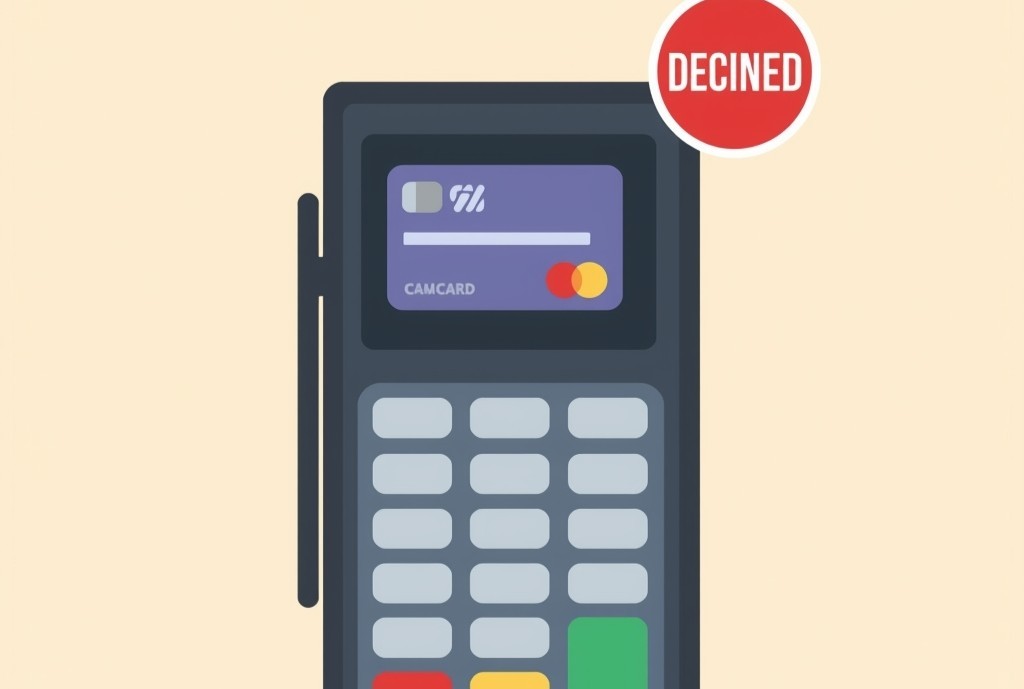
If your credit card suddenly gets declined after using several Buy Now Pay Later (BNPL) apps, you’re not alone. Many Indian users in 2025–2026 are facing this issue as banks tighten risk checks under the Reserve Bank of India’s (RBI) evolving digital lending and BNPL supervision framework. This has led to instances of Credit Card Declined BNPL as users navigate through these changes. RBI’s stricter oversight on digital lending and prepaid‑credit models has been increasing since 2024, with further tightening expected through 2026. AMLEGALS billcut.com
This article explains why your card may get declined, how BNPL exposure affects your creditworthiness, and what you can realistically do next.
Why Readers Search This Topic
Understanding Credit Card Declined BNPL: Key Insights
Most people searching this are worried about:
- Why their credit card suddenly stopped working
- Whether BNPL usage is harming their credit score
- Whether RBI’s new digital lending norms are causing stricter checks
- How to reduce digital credit exposure without hurting their finances
- Whether banks can see BNPL loans even if they don’t show up on CIBIL
Let’s break it down in simple, practical terms.
Quick Answer: Why Your Credit Card Was Declined
Banks in 2025–2026 are using enhanced risk‑based credit checks due to RBI’s digital lending guidelines. If you use multiple BNPL apps, your overall unsecured credit exposure increases. Even if some BNPL lines don’t appear on your CIBIL report, banks still detect patterns such as:
- Frequent small-ticket credit usage
- High repayment frequency
- Multiple active digital lenders
- Delays or partial payments
- High utilization of short-term credit
This can trigger temporary card declines, reduced limits, or stricter fraud checks.
How BNPL Affects Your Credit Profile Under 2026 Norms
RBI’s digital lending guidelines (updated through 2024 and influencing 2025–2026 supervision) focus on:
- Transparent KYC
- Regulated NBFC/bank partnerships
- Prevention of hidden credit lines
- Better reporting of digital loans to credit bureaus
billcut.com LinkedIn
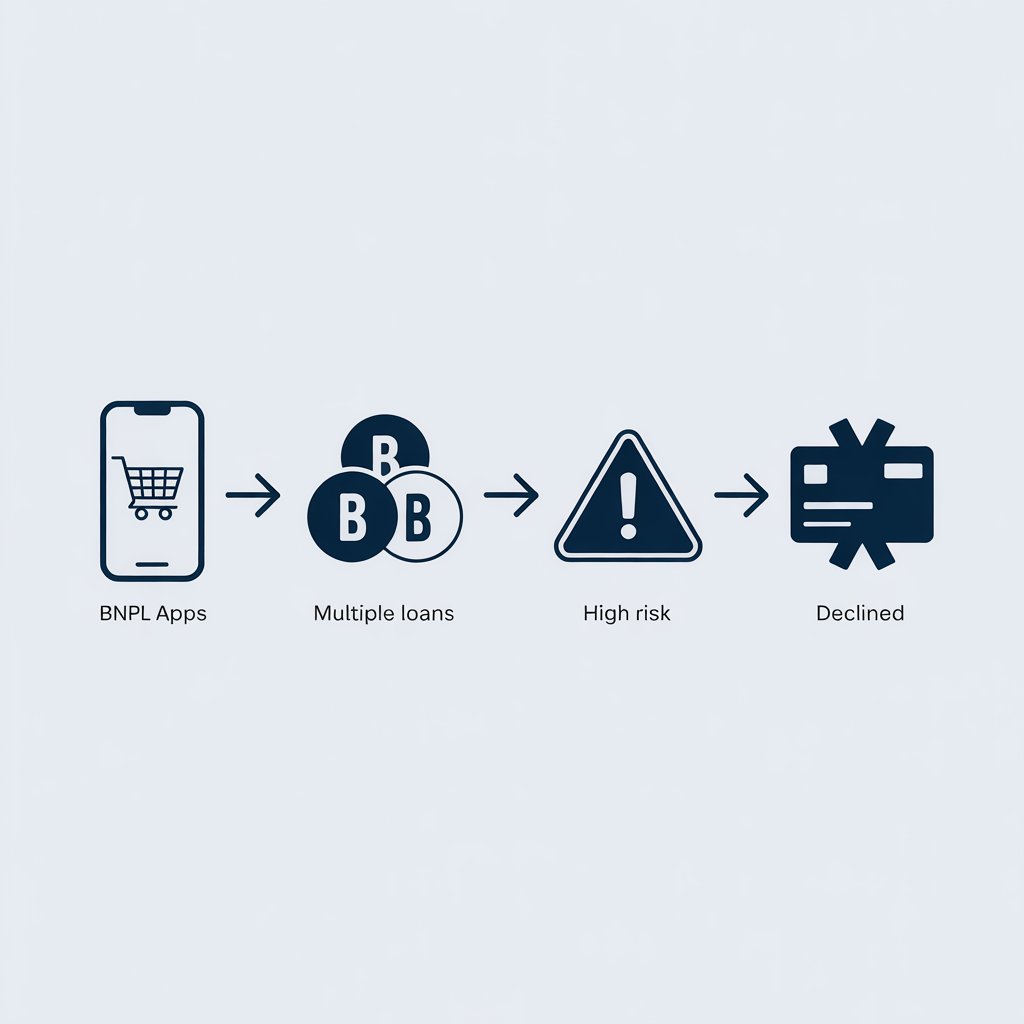
What this means for you:
- BNPL is now treated more like a loan
Even “zero-cost” BNPL is considered unsecured credit exposure. - Banks are monitoring digital credit behaviour more closely
They assess whether you rely too heavily on short-term credit. - Multiple BNPL accounts = higher perceived risk
Even if each limit is small, the combined exposure matters. - Delayed BNPL payments hurt your credit score
Many BNPL partners now report to CIBIL/Experian/CRIF. - Banks may pre‑emptively decline transactions
This is a risk‑control measure, not necessarily a permanent block.
A Realistic Indian Example
Rohit, a 27‑year‑old from Jaipur, used:
- Amazon Pay Later
- Flipkart Pay Later
- Two fintech BNPL apps for food and travel
- A salary‑advance app
All repayments were on time. But when he tried to swipe his credit card for ₹4,500 at a petrol pump, it got declined.
Why?
His bank’s risk engine flagged multiple active short-term credit lines and frequent micro‑loans, indicating potential repayment stress—even though his CIBIL score was still 735.
This is increasingly common in 2025–2026.
Hidden Risk: BNPL Apps That Don’t Show on CIBIL Still Affect You
Many users assume:
“If it doesn’t show on my credit report, it won’t affect my credit card.”
Not true.
Banks use:
- Device‑level behavioural analytics
- Spending pattern analysis
- Internal risk models
- Industry‑shared fraud/risk signals
- Account aggregator data (if you consented)
Even if a BNPL line is not reported, your repayment behaviour and frequency of digital credit usage still influence risk scoring.
A Practical Money-Loss Scenario
If your card gets declined during:
- Travel bookings
- Emergency medical payments
- Online bill payments
You may be forced to use costlier alternatives like: - Cash withdrawals (high fees)
- Emergency loans
- Borrowing from friends/family
- Missing early-bird discounts or due dates
This indirect financial loss is rarely discussed but very real.
Common Mistakes People Make
1. Assuming BNPL is “not a loan”
It is unsecured credit and treated as such by lenders.
2. Using 4–6 BNPL apps simultaneously
This creates a pattern of dependency.
3. Paying only minimum BNPL dues
Some BNPLs allow partial payments—this signals stress.
4. Ignoring repayment reminders
Even a 1–2 day delay can be reported.
5. Applying for new credit immediately after a decline
This triggers more hard enquiries and worsens the situation.
When This Option (Multiple BNPL Apps) Is Not Suitable
Avoid using multiple BNPL apps if:
- Your income is irregular
- You already have high credit card utilization
- You plan to apply for a home loan or car loan soon
- You struggle to track multiple due dates
- You rely on BNPL for essential expenses (a red flag for banks)
How to Reduce Your Digital Lending Exposure
1. Close unused BNPL accounts
Most apps allow closure through customer support.
2. Repay all BNPL dues before the due date
Avoid partial payments.
3. Keep only 1–2 BNPL accounts active
Prefer those linked to regulated banks/NBFCs.
4. Reduce micro‑transactions on credit
Use UPI or debit for small purchases.
5. Check your credit report every 3–4 months
Look for:
- Incorrect BNPL entries
- Duplicate loans
- Delayed reporting
6. Avoid applying for new credit for 60–90 days
Let your risk profile stabilize.
When to Consider Using BNPL
BNPL can be useful when:
- You need short-term liquidity
- You can repay in full within 30 days
- You want to avoid credit card interest
- You track due dates carefully
- You use only 1–2 trusted platforms
FAQs
1. Does BNPL reduce my credit card limit ?
Not directly, but banks may reduce limits if they detect high unsecured credit exposure.
2. Does every BNPL report to CIBIL?
Not all, but many regulated NBFC partners do. Reporting is increasing under RBI’s digital lending framework.
3. Can a credit card be blocked permanently due to BNPL usage?
Rarely. Most declines are temporary risk checks unless there are repeated delays or high exposure.
4. Will closing BNPL accounts improve my credit score?
It may improve your risk profile over time, but score improvement depends on overall credit behaviour.
5. Are RBI rules the same for all BNPL apps?
No. Rules vary depending on whether the BNPL operates through a bank, NBFC, or prepaid instrument. Always verify from official sources.
Things to Remember
- BNPL is unsecured credit and affects your risk profile.
- Multiple BNPL apps increase perceived financial stress.
- Banks use advanced analytics beyond CIBIL.
- Temporary card declines are common in 2025–2026 due to stricter digital lending norms.
- Keep BNPL usage limited and repayments timely.
- Always verify rules from RBI and your bank’s official website.
Neutral Final Verdict
Using BNPL is not inherently bad. It becomes risky only when used excessively or without repayment discipline. Under RBI’s strengthened digital lending oversight for 2025–2026, banks are more cautious about customers with multiple short-term credit lines.
If your credit card was declined, treat it as a signal to reassess your digital credit exposure—not as a permanent setback.
Related Topics You May Want to Read
- How BNPL affects your CIBIL score in 2026
- Credit card limit reduction reasons and recovery steps
- Difference between BNPL, personal loans, and credit cards for Indian users
Last reviewed in 2025/2026. Financial rules and rates may change. Please verify latest details from official websites.
Disclaimer: For educational purposes only. Rules, charges, and policies may change. Verify all information from official RBI, bank, and credit bureau sources. No financial outcome is guaranteed.